
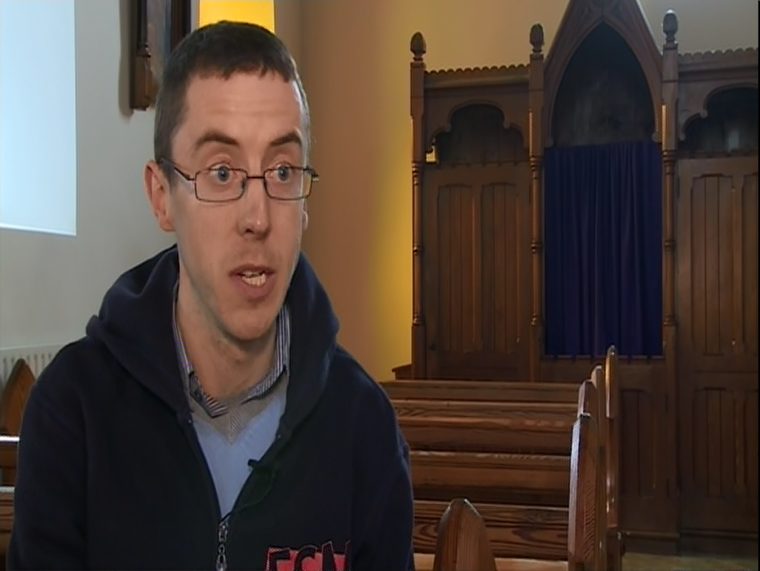
Many people in Catholic circles are not in agreement whether single-life is a vocation or not. Some people say it is a vocation. Others say it’s an anticipatory state in life awaiting commitment to God in love either through a spouse, in the marriage vocation; or directly to God, through a commitment to celibacy or virginity for the Kingdom. They express this view because unlike vocations to marriage, religious life and consecrated life, no public vows or promises are made to permanently commit to the single state – meaning that single people are free to discern entering into marriage or consecrated life at any point in their lives.
I am of the view that single life can be a vocation from God and that it is not simply reserved as the last “default” option – the single life can be a tangible and meaningful way through which we live out our baptismal call to discipleship to follow Jesus, share His mission, and make God’s love present in the world through daily life, service, holiness, and evangelisation. This is the primary vocation of all Christians – to love as Jesus loves, and to live out the Two Great Commandments that he has given humanity “you must love the Lord your God with all your heart, with all your soul, with all your mind and with all your strength…You must love your neighbour as yourself. There is no commandment greater than these.” (Mark 12:29-31).
In his Message for the World Day of Prayer for Vocations in 2001, Saint John Paul II wrote: – “The word ‘vocation’ is a very good definition of the relationship that God has with every human being in the freedom of love, because ‘every life is a vocation’ (Paul VI, Enc. Lett. Populorum Progressio, 15). For man would not exist were he not created by God’s love and constantly preserved by it. And he cannot live fully according to truth unless he freely acknowledges that love and devotes himself to his Creator” (Gaudium et Spes n. 19). The Pope went on to outline that it is in the embodiment of this dialogue of love with God “that we find the basis of each person’s possibility to grow along his or her own lines and according to his or her own characteristics, which have been received as a gift and are able to ‘give meaning’ to his or her personal story and to the fundamental relationships of his or her daily existence, as he or she walks along the path that leads to the fullness of life.”
We frequently hear the phrase ‘life-long learning’ referred to in today’s culture. When I reflect on my life over the last thirty years, I realise that the discernment of my vocation has been a life-long process. My formation in the Catholic faith has been intertwined with my personal life story. I have grown in my relationship with God through the ups and downs I’ve experienced in life. An important period of conversion in my faith was the time I spent attending the Emmanuel School of Mission in 2011-12, a course that was run in Rome supported by the Pontifical Council for the Laity and accredited by Lateran Pontifical University. It was a year to open up to others, to broaden my horizons, and to put God at the centre.
During the year we had daily mass, adoration, praise, availability of regular confession, guided retreats and desert days, and the constant support of a spiritual companion, chaplain and the leadership team.Without a mobile phone or television it was easier to find time for silence, personal prayer and reflection. I learned the importance of daily Mass and of having a sustained time of daily prayer in Adoration. While most of my classmates subsequently found their vocation through marriage, I felt called to strive to live my life as a lay person, more concretely for God, different than the way it was before. That year gave me a solid foundation in my life, and showed that I could make a committed gift-of-self to God in single life, while continuing to strive to live out the baptismal call of a life of love and service to God and His people here and now.
The charism of the Emmanuel School of Mission was focused resolutely on evangelisation, and I was challenged to really live out the Eucharist, to live by the life of Christ. Being immersed into the spirituality of the Emmanuel Community challenged me to bring my adoration of Jesus outwards into acts of compassion and evangelisation.The Guide to Community Life outlines that “The profound grace of the Community comes from Eucharistic Adoration…From this Adoration is born compassion for all who are dying of hunger, both materially and spiritually. From this compassion is born the thirst to evangelise”. Compassion service with the poor and needy, and visiting elderly religious in hospital and feeding them, gave me a desire to meet Jesus in my suffering brothers and sisters, a desire I still have today.
When I returned to Ireland I was involved in various evangelisation initiatives. I became a member of the Emmanuel Community and was involved leading the Nightfever movement in Dublin. I helped with Alpha Youth courses and liturgy preparation in the parish of Mullingar and was involved for a number of years in facilitating school retreats in Mount Saint Anne’s Retreat Centre with the Presentation Sisters. I also continued my work on the Sacred Space website. I felt a calling from God to undertake further theological studies in 2016 and I reverted back to working part-time as I attended St. Patrick’s College Maynooth and immersed myself in theological studies in accordance with St. Anselm’s maxim of “faith seeking understanding”. I had an enriching experience there learning more about my Catholic faith with a small group of students, mostly young teachers. That experience gave me the appetite for further study and I decided to discern the role of a chaplain by undertaking an MA in Chaplaincy Studies and Pastoral Work at Dublin City University and placement with the Archdiocese of Dublin.
After I completed the Chaplaincy course I made another ‘Duc in Altum’[1] when I took up an offer of employment with the Archdiocese of Liverpool as a Catholic Chaplaincy Assistant at Liverpool Hope University. This was a great learning experience and I enjoyed immensely working as part of a chaplaincy team to support students and staff on their journey of faith and living with a small young adult Catholic community beside the Metropolitan Cathedral. I also gained more valuable experience working with teenagers in a local secondary school for a year and also qualified as a Special Needs Assistant.
Naturally not all has gone well as I would have hoped and like others I have experienced challenging times in my life such as disappointments, regrets, trauma and loss. There were a few difficult periods in particular – in my early twenties when I was diagnosed with bipolar disorder – and in my late thirties after I left a long-standing employment. The chaplaincy studies was a very demanding course that led me to reflect more about the difficult experiences of life, but I have to say that reflective practice has helped me a lot in my life in the embodiment of spiritual and psychological healing. While living with a mental illness has presented me with certain challenges, I have received much spiritual consolation through my yearning for God in the midst of my struggles, particularly by experiencing his loving presence through the Sacraments of Healing and by spending regular time in Eucharistic Adoration.
The vocation to single life is one of service and self-giving. While in the past I was nourished in faith and fellowship through the faith communities I was part of, not being part of a vibrant faith community in recent years has been a challenging aspect of living out my Catholic faith. Also, I had a meaningful role in church ministry for many years and this is not the case any more. While I am disappointed that more pastoral opportunities have not arisen for me to use my gifts, I remain committed to striving to fully live out the Christian life – and I hope that there may be some ways for me to serve the church in a more fruitful way in the future – as I truly believe that the vocation to the single life is a great gift to the Church.
Praying for the Holy Spirit’s guidance and for the disposition to allow the Holy Spirit to take hold of my life, has helped me to discern and be led to where God is directing me in my life.”If we live by the Spirit, let us also be guided by the Spirit” (Galatians 5:25). For me it is important to strive to be humble, to trust in God, and not to allow my ego or pride to get in the way of the presence and action of the Holy Spirit. By striving to live a life of grace I have felt God’s presence with me and I am at peace with myself and with God in the single life, feeling the closeness of the Lord and trusting that he walks with me on life’s journey.
As Saint John Paul II remarked: – “At the root of every vocational journey there is the Emmanuel, the God-with-us. He shows us that we are not alone in fashioning our lives, because God walks with us, in the midst of our ups-and-downs, and, if we want him to, he weaves with each of us a marvellous tale of love…To discover the presence of God in our individual stories, not to feel orphans any longer, but rather to know that we have a Father in whom we can trust completely – this is the great turning-point that transforms our merely human outlook and leads man to understand, as Gaudium et Spes affirms, that he ‘cannot fully find himself except through a sincere gift of himself’ (n. 24).”
There is no doubt in my mind that God put a call in my heart fifteen years ago to study for a deeper formation in my faith, and to learn how to be a true missionary. By responding to God’s call “to do him some definite service”,[2] I realised concretely that I have a purpose and a mission in my life. And no one can fulfil that mission except for me. It is a mission of love and relationship.Fulfilling God’s plan for our lives takes our whole heart. The vocation to the single life liberates our heart in love so as to make it burn with greater love for God and humanity. The person committed to the single life “bears witness that the Kingdom of God and His justice is that pearl of great price which is preferred to every other value no matter how great”, as Saint John Paul II remarked in his post-synodal apostolic exhortation on The Role of the Christian Family in the Modern World (Familiaris Consortio, 16).
The truth is that fulfilment in ourselves is not possible. Our destiny is union and communion with God and one another through obedience to God’s commandments, exercise of the moral virtues, and fidelity to prayer. Through the way they live out their vocation, people called to the single life can demonstrate that it is possible to live a life in the world while remaining committed to God and His Church. This is summed up well through the call to holiness explicit in the charism of the Emmanuel Community – that places Jesus at the centre of our lives and the call to live in the world without being of the world.
Although living life as a single person over the past fourteen years has been challenging at times, my single life state has also given me freedom and independence. I am particularly grateful for the support I received from the Church, religious communities and individual donors towards my faith formation and to the priests and religious who have helped me with administering the sacraments, personal discernment and spiritual direction. I wouldn’t change the journey that I have been on, even the times when I had to embrace the Cross. I am okay with being vulnerable because I believe God is still working on me. I trust in his providence and I desire to surrender my future plans to his will. I truly believe that God accomplishes everything in his own time.
[1] The expression “Duc in Altum” [Latin translation for “Put out into the deep”] originates from the exhortation of Jesus to Simon to “Put out into deep water and lower your nets for a catch” (Luke 5:4).
[2] “God knows me and calls me by my name.…God has created me to do Him some definite service”; [“Some Definite Service” – Saint John Henry Cardinal Newman].
